Finland Rolls Out Strict Loss Caps and Play Limits to Address Problem Gambling
Ellis Koch · Jun 23, 2026

Finland Rolls Out Strict Loss Caps and Play Limits to Address Problem Gambling
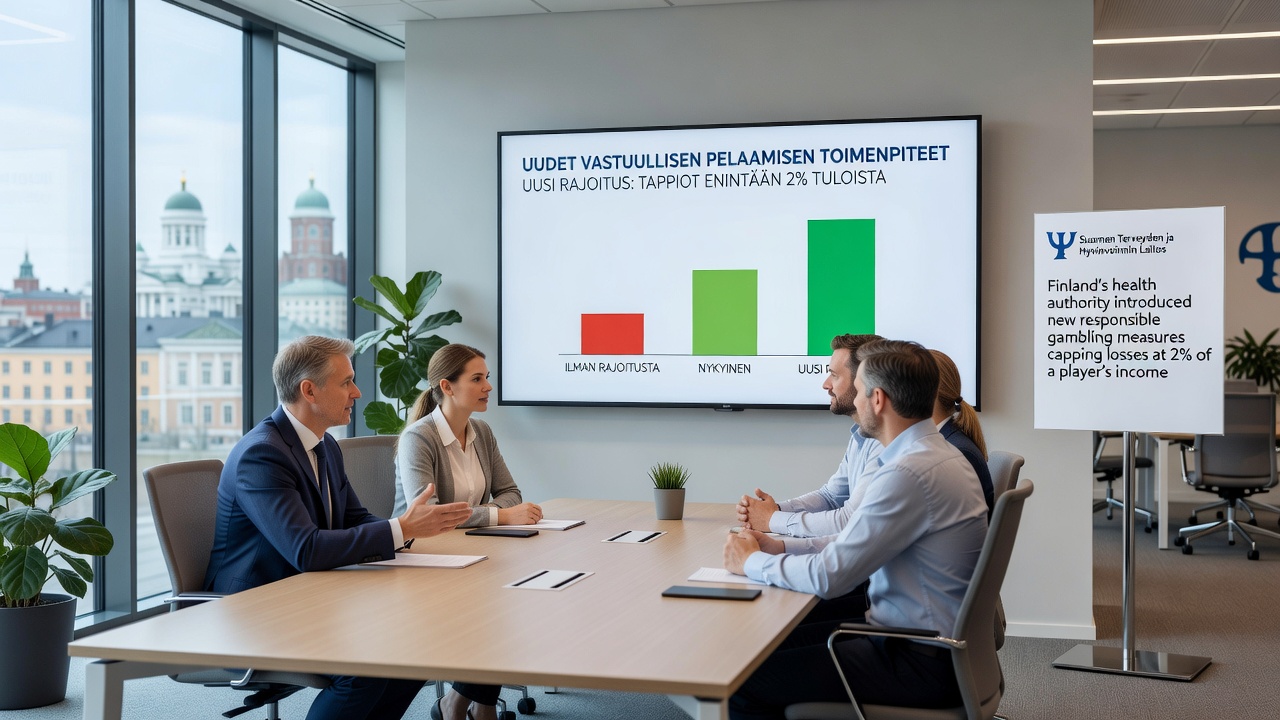
Finland's health authority has rolled out fresh responsible gambling rules that set loss caps at 2 percent of a player's income while restricting play sessions to just four days within each defined period and confining users to a maximum of two game types at any given time, and these steps target the rise in problem gambling cases as the country prepares for its 2027 shift toward licensed private operators.
The measures took shape through announcements tied directly to the health authority's oversight role, and they arrived amid ongoing preparations that gained momentum in June 2026 when officials reviewed player data showing increased participation across digital platforms.
Core Elements of the New Restrictions
Loss limits form the centerpiece of the policy since they tie directly to individual income levels rather than applying a flat figure across all users, which means a player earning 50,000 euros annually faces a maximum allowable loss of 1,000 euros over the monitored period while higher earners encounter proportionally larger thresholds yet still encounter the same percentage boundary, and this structure aims to keep gambling expenditures within sustainable bounds without creating uniform barriers that ignore financial differences.
Play frequency receives equal attention through the four-day limit per period, which operators must enforce via account tracking systems that flag attempts to exceed the threshold and automatically pause access until the next cycle begins, and this approach builds on existing verification tools already in place for age and identity checks.
Game type restrictions cap participation at two categories simultaneously, so a user might select slots and table games but cannot branch into sports betting or live casino options during the same window, and the rule encourages focused engagement that regulators believe reduces the appeal of chasing losses across multiple formats.
Timing and Market Context
These changes align with Finland's broader transition scheduled for 2027 when the market opens to private companies operating under national licenses, and the health authority positioned the rules as preparatory steps that will carry forward once competition increases and new platforms enter the space, while current monopoly structures give way to a regulated environment that still demands strong consumer protections.
June 2026 marked a key checkpoint in this timeline as preliminary compliance guidelines circulated among existing operators and testing began on the technical systems needed to monitor income percentages and game-type selections in real time, and authorities used that window to gather feedback from industry stakeholders before final rollout.
Implementation and Enforcement Mechanisms
Operators receive clear directives on integrating these limits into their platforms, including automated income verification processes that pull from verified financial records with user consent and real-time dashboards that display remaining loss allowances for each account, and non-compliance carries penalties that range from temporary license suspensions to fines scaled according to violation severity.
Player accounts must display clear notifications when approaching any threshold, such as warnings at 75 percent of the loss cap or when the four-day play window nears completion, and these alerts appear both within the gaming interface and through linked email or app notifications to maintain transparency throughout the session.
Data collection supports ongoing evaluation since the health authority requires monthly reports on how many accounts hit the various limits and whether the restrictions correlate with reduced reports of gambling-related harm, and this feedback loop allows adjustments before the 2027 market expansion fully activates.
Objectives Behind the Policy Shift
Officials designed the package specifically to address documented increases in problem gambling indicators that emerged from national health surveys conducted in prior years, and the combination of financial, temporal, and categorical limits creates multiple layers of control that together form a comprehensive barrier against excessive play patterns.
According to the source announcement, the rules seek to maintain public health standards during a period of regulatory change, and they reflect patterns observed in other jurisdictions where similar percentage-based caps have shown measurable effects on player behavior without eliminating access entirely.
Conclusion
The health authority's measures establish a defined framework that operators and players alike must navigate in the lead-up to 2027, and the emphasis on income-linked losses, limited play days, and restricted game variety creates a structured environment aimed at containing harm while the market evolves toward greater private participation. Data tracking and periodic reviews will determine how effectively these tools function once implemented across the full operator base.