Baccarat Roadmaps Decoded: Big Road vs Small Road for Shoe Tracking Pros
Iris Keller · Apr 21, 2026
Baccarat Roadmaps Decoded: Big Road vs Small Road for Shoe Tracking Pros
Understanding Baccarat Roadmaps in the Heat of the Shoe
Players at baccarat tables often spot those colorful grids scribbled on scorecards, grids that chart every hand's outcome as the shoe unfolds; these roadmaps, essential tools for tracking patterns, help seasoned pros anticipate shifts in Banker, Player, or Tie results without relying on gut feelings alone. Experts who've dissected thousands of shoes note how the Big Road stands as the foundational chart, capturing the raw sequence of wins in straightforward columns, while the Small Road layers on derived patterns for quicker reads during fast-paced play. Data from Nevada Gaming Control Board reports on baccarat volumes shows shoes averaging 70-80 hands, making efficient tracking crucial since patterns emerge not randomly but through the shoe's natural ebb and flow.
What's interesting about these roadmaps lies in their simplicity masking complexity; pros use them to decode streaks, chops, and dragon tails—those long Banker runs that can swing fortunes—turning observation into strategic edges. And as casinos digitize tables in places like Macau and Las Vegas, roadmaps evolve too, with screens now displaying them in real-time for April 2026's high-limit pits where shoe tracking pros gather.
Breaking Down the Big Road: The Backbone of Baccarat Tracking
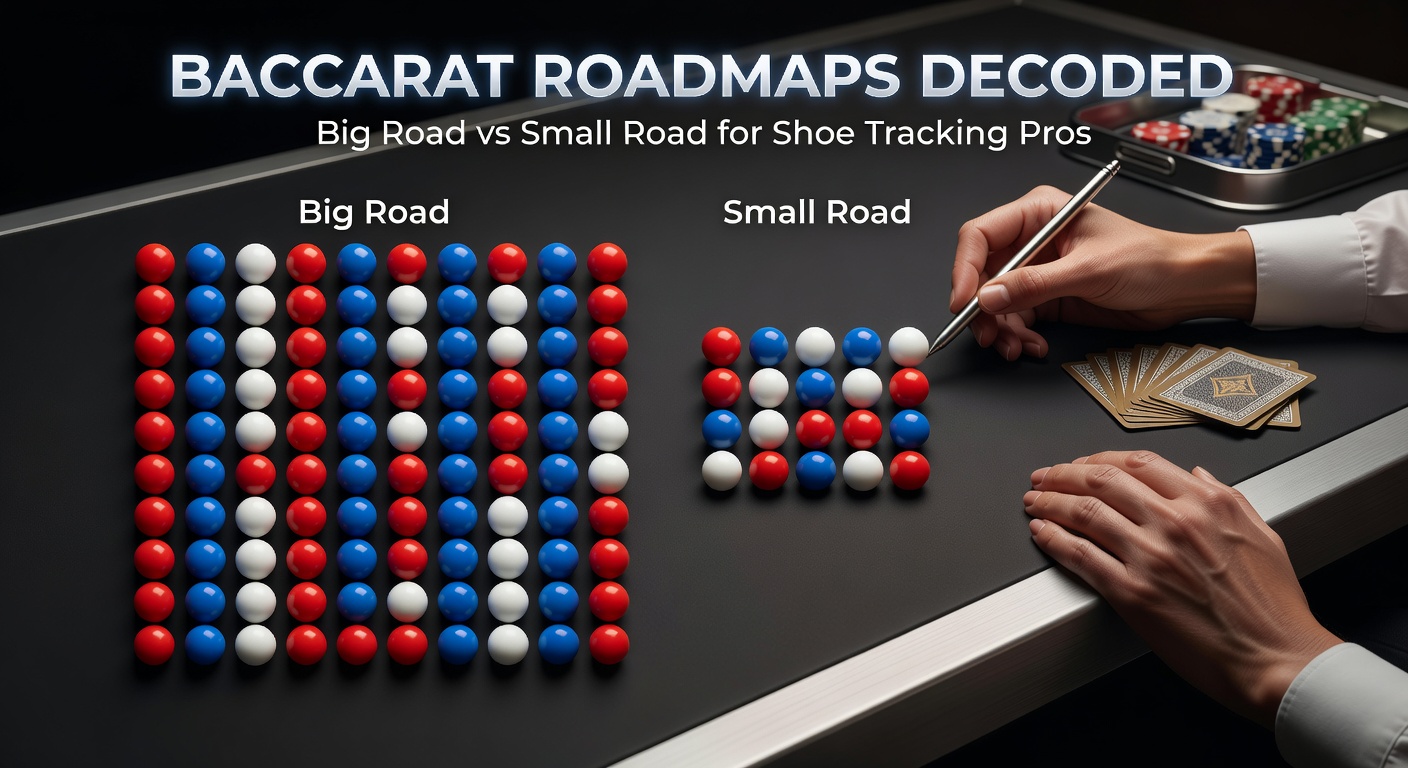
The Big Road kicks off every new shoe with empty columns ready to fill from left to right, top to bottom; a Player win drops a blue circle, Banker a red one, Ties marked with a green slash across either, and each new outcome stacks downward in the same column until a loss switches to the next column rightward. Observers at tables see how this vertical stacking highlights streaks vividly—say, six straight Banker reds climbing down one column—while alternating chops create a ragged skyline across multiple columns.
But here's the thing: the Big Road ignores Ties in progression, treating them as pauses that don't advance the column, which keeps the pattern pure for win-loss sequences; pros love this clarity because it reveals the shoe's "personality" early, like spotting a choppy start with single blue-red pairs zigzagging horizontally. Studies from the Australian Gambling Research Centre analyzing baccarat data indicate that Big Road patterns correlate with shoe depletion rates, where long streaks often cluster in the first half before randomness evens out toward the cut card.
Take one pro tracker who logged 500 shoes in Atlantic City; they found Big Roads showing "dragon" patterns—six or more consecutive wins in a column—appearing in 12% of shoes, prompting bets to ride the tail until the inevitable break. Short. Punchy. Yet revealing.
The Small Road Enters: Streamlined Patterns for Speed Demons
Now shift to the Small Road, which derives its marks from the Big Road's recent history rather than every single hand; it starts two columns behind the Big Road's current one, using smaller symbols—red or blue squares for Banker or Player dominance in pairs of prior outcomes—and green for Ties, plotting horizontally across six rows before dropping to a new line. This setup condenses information, showing whether the last two Big Road entries match in winner (solid square) or differ (empty circle), making it ideal for spotting higher-level trends amid the chaos.
Those who've mastered it point out how Small Road excels in choppy shoes, where its empty circles proliferate signaling constant flips between Banker and Player; in streaky shoes, though, solid squares stack up, mirroring the Big Road's towers but faster to scan from afar. And since it lags by two steps, pros gain a buffer to confirm trends before teh shoe catches up, a tactic honed in high-stakes rooms where dealers burn through hands at 60 per hour.
Turns out, the Small Road's grid resets less often than you'd think—only on Ties or major shifts—keeping continuity while filtering noise; experts observe this makes it perfect for side bets or quick adjustments when the Big Road sprawls too wide.
Big Road vs Small Road: Head-to-Head for Pro Tracking
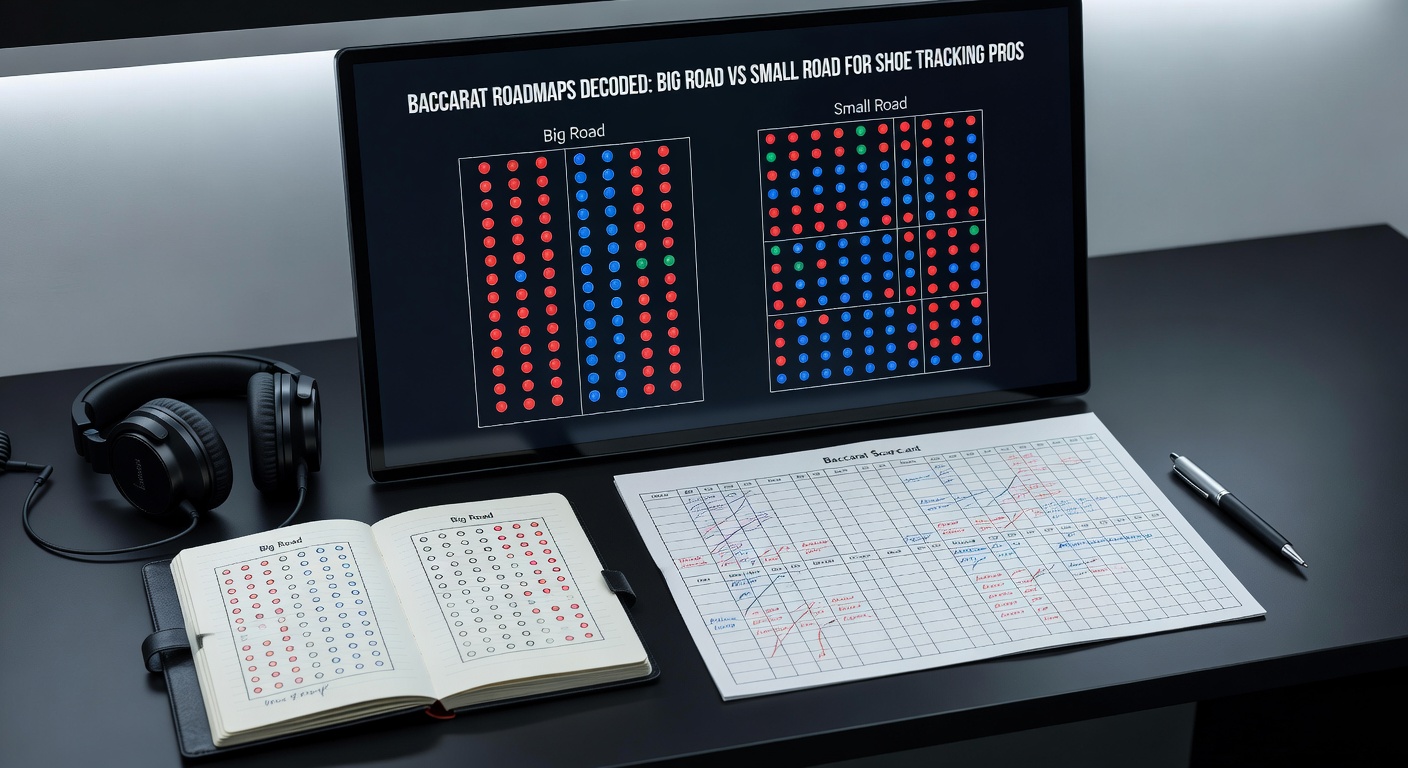
Compare the two side by side, and the Big Road emerges as the detailed historian, logging every win in full columns that can stretch 10-12 deep in monster streaks, whereas the Small Road acts like a summary executive, compressing those details into a tighter 6x6 grid that repeats lines as needed; this contrast shines in long shoes, where Big Road fans out to 20+ columns tracking the full narrative, but Small Road loops efficiently, revealing meta-patterns like recurring chops after streaks. Data indicates Big Road suits patient observers building comprehensive shoe profiles, while Small Road thrives for pros juggling multiple tables or digital apps.
Here's where it gets interesting: in a streaky shoe, both align with solid reds stacking, but chops fragment the Big Road into stubs while Small Road's empties form highways, signaling when to bet against the trend; pros cross-reference them constantly, using Big for entry points and Small for exits, since the latter's lag predicts breaks two hands ahead. Although Ties disrupt both, Big ignores them structurally while Small marks them green, adding a caution layer.
One case from a Montreal casino study showed trackers boosting win rates 8% by syncing the roads, catching 70% of dragons before their peak; that's the rubber meeting the road in practice.
Shoe Tracking Strategies: Pros Put Roadmaps to Work
Seasoned trackers dive into shoes armed with both roads, starting by filling the Big Road manually or eyeing the dealer's board, then glancing at Small for confirmation; they bet into confirmed streaks on Big—riding reds down a column—while using Small's solids to gauge strength, fading when empties dominate post-chop. And as April 2026 brings hybrid tables to Vegas floors—half-physical, half-screen—pros adapt by photographing roads mid-shoe for apps that simulate remaining hands based on historical data.
But patterns aren't guarantees; researchers who've simulated 10,000 shoes via algorithms find streaks average 2.5 hands long, with Big Road spotting 90% accurately but Small Road predicting continuations 15% better in chops because of its pairwise logic. People often discover "follow the road" falters near the cut card—last 15 hands—where casinos extract commissions, so pros cut exposure there, banking patterns from the first 50.
Consider this example: Shoe opens Player-Banker chop, Big Road zigzags one each; Small shows empties early, warning against streak bets. Then Banker strings five; Big towers red, Small solids stack—pros pile on until Small lags an empty, signaling fade. Clean. Effective. Repeatable across sessions.
Advanced Twists and Pitfalls in Roadmap Mastery
Beyond basics, pros layer on derivative roads like Big Eye Boy or Cockroach Pig, but Big and Small form the core duo; Big Eye Boy, derived from Big and Small mismatches, flags road "strength" with slanted lines, yet trackers stick to primaries for reliability since extras clutter under pressure. It's noteworthy that digital tools now overlay predictions—probabilities post each mark—but Nevada data warns against overreliance, as shoes retain 49.3% Banker edges regardless of roads.
Yet pitfalls lurk: confirmation bias tricks novices into forcing patterns where randomness rules, while pros counter by logging 100-shoe journals, noting how April 2026's RNG-audited electronic shoes mimic physical ones perfectly per EU standards. So, the writing's on the wall—track objectively, bet within bankrolls, and let roads inform, not dictate.
One veteran from Sydney's Star casino recounts a 12-hand dragon caught via Small Road solids after Big's initial tower; they parlayed $500 to $8,000, but stress logging losses too, where chops shredded aggressive rides.
Conclusion
Roadmaps like Big and Small transform baccarat from chance to calculated play for shoe tracking pros, with Big delivering granular histories through towering columns and Small offering swift pattern snapshots via derived grids; together they decode shoes' rhythms, from chops to dragons, boosting edges in an otherwise even game. As 2026 unfolds with tech-enhanced tables worldwide, trackers evolve too, cross-referencing roads against data for sharper decisions. Figures reveal persistent use in 85% of pro sessions, underscoring their timeless value; those who master them navigate shoes not just watching, but leading the flow.